Buy citylodge.eu ?
We are moving the project
citylodge.eu .
Are you interested in purchasing the domain
citylodge.eu ?
domain@kv-gmbh.de · 0541-91531010
Buy citylodge.eu ?
What is the deontological perspective?
The deontological perspective is an ethical theory that focuses on the inherent rightness or wrongness of actions themselves, rather than the consequences of those actions. It is based on the idea that certain actions are morally obligatory regardless of their outcomes. Deontologists believe that individuals have a duty to follow certain moral rules or principles, such as honesty or respecting others' autonomy, regardless of the potential benefits or harms that may result. This perspective is often associated with philosophers like Immanuel Kant, who argued that moral principles are universal and apply to all rational beings. **
What is meant by deontological and teleological?
Deontological ethics is an ethical theory that focuses on the inherent rightness or wrongness of actions themselves, rather than the consequences of those actions. It emphasizes the importance of following moral rules and duties, regardless of the outcomes. On the other hand, teleological ethics, also known as consequentialism, is an ethical theory that evaluates the morality of actions based on their outcomes or consequences. It emphasizes the idea that the rightness or wrongness of an action is determined by the overall good or bad results it produces. In summary, deontological ethics focuses on the inherent nature of actions, while teleological ethics focuses on the outcomes of actions. **


Similar search terms for Deontological
Top-Angebote
Products related to Deontological:
-
SAMSUNG HG43U800FEU HU8000F Series - 43" LED-backlit LCD TV - Crystal UHD - 4K - for hotel / hospitalitySamsung HG43U800FEU - 43" Diagonal Class HU8000F Series LED-backlit LCD TV - Crystal UHD - hotel / hospitality - Tizen Enterprise - 4K UHD (2160p) 3840 x 2160 - HDR - black468,99 £*Shipping: 0,00 £Secure redirect to the provider
-
SAMSUNG HG50U800FEU HU8000F Series - 50" LED-backlit LCD TV - Crystal UHD - 4K - for hotel / hospitalitySamsung HG50U800FEU - 50" Diagonal Class HU8000F Series LED-backlit LCD TV - Crystal UHD - hotel / hospitality - Tizen Enterprise - 4K UHD (2160p) 3840 x 2160 - HDR - black588,99 £*Shipping: 0,00 £Secure redirect to the provider
-
Inspired Living Black Cat Please Stay Bookmark Black Cat Please Stay BookmarkImagine settling in for a cozy reading session and opening your book to find a tiny black cat smiling up at you a gentle wink that your story is waiting. Thats exactly what the Black Cat Please Stay Here Stainless Steel Bookmark gives you: a...23,97 $*Shipping: 0,00 $Secure redirect to the provider
-
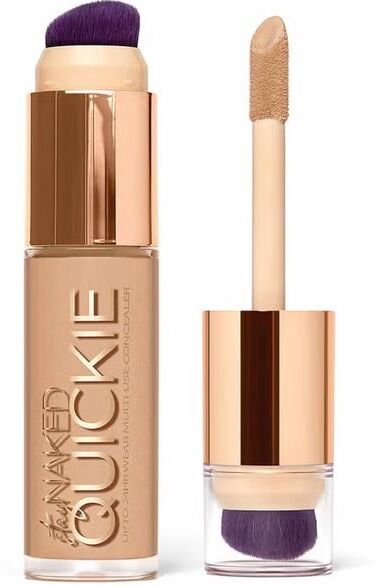
Urban Decay Stay Naked Quickie-10NnDiscover the Urban Decay Stay Naked Quickie Concealer, your new secret weapon for flawless, all-day coverage. This high-performance, full-coverage concealer is designed to deliver up to 24 hours of long-lasting wear with a natural, real-skin matte finish that won't fade or flake. Perfect for addressing common concerns like under eye dark circles, acne blemishes, hyperpigmentation, discoloration, and redness, its lightweight, waterproof formula offers one-swipe full coverage. The unique, dual-sided applicator features a precise doe foot wand for targeted spots and a built-in buffing brush, making on-the-go application incredibly convenient—simply "Tap it. Buff it. and be done." Infused with Vitamin E, this hydrating concealer ensures your skin stays moisturized all day long while minimizing imperfections and improving overall skin tone, making it the best choice for fast, reliable coverage. Ingredients: Water, Undecane, Glycerin, Dimethicone, Polyglyceryl-4 Isostearate, Synthetic Fluorphlogopite, Pentylene Glycol, Butylene Glycol, Tridecane, Cetyl Peg/Ppg-10/1 Dimethicone, Hexyl Laurate, Magnesium Sulfate, Polyhydroxystearic Acid, Octyldodecanol, Disteardimonium Hectorite, Disodium Stearoyl Glutamate, Cellulose Gum, Ethylhexylglycerin, Silica Silylate, Acrylonitrile/Methyl Methacrylate/Vinylidene Chloride Copolymer, Trihydroxystearin, Aluminum Hydroxide, Acetylated Glycol Stearate, Tocopherol, Isobutane, Glycine Soja Oil / Soybean Oil, Helianthus Annuus Seed Oil / Sunflower Seed Oil, Pentaerythrityl Tetra-Di-T-Butyl Hydroxyhydrocinnamate, [+/- May Contain Ci 77891 / Titanium Dioxide, Ci 77491, Ci 77492, Ci 77499 / Iron Oxides.32,00 £*Shipping: 0,00 £Secure redirect to the provider



-
Does Kant's deontological ethics contradict Aristotle's eudaemonistic ethics?
Kant's deontological ethics and Aristotle's eudaemonistic ethics have some fundamental differences, but they do not necessarily contradict each other. Kant's ethics focus on duty and the intention behind actions, while Aristotle's ethics emphasize achieving eudaimonia, or human flourishing, through virtuous actions. While Kant's emphasis on duty can sometimes conflict with Aristotle's emphasis on virtue, both ethical theories ultimately aim to guide individuals towards leading a good and moral life. Therefore, while they may approach ethics from different perspectives, they can be seen as complementary rather than contradictory. **
-
Does discourse ethics have a teleological or deontological approach?
Discourse ethics is primarily associated with a deontological approach. It focuses on the principles of communication and interaction between individuals, emphasizing the importance of ethical norms and rules in guiding discourse. The goal is to ensure that communication is based on mutual respect, equality, and rationality, rather than aiming towards a specific outcome or goal. By prioritizing the ethical principles of communication, discourse ethics aims to create a fair and just dialogue among participants. **
-
What is the difference between deontological ethics and utilitarianism?
Deontological ethics is an ethical theory that focuses on the inherent rightness or wrongness of actions themselves, regardless of their consequences. It emphasizes the importance of following moral rules and duties, such as telling the truth or keeping promises, regardless of the outcomes. On the other hand, utilitarianism is a consequentialist ethical theory that evaluates the morality of actions based on their outcomes. It prioritizes maximizing overall happiness or well-being for the greatest number of people, often through the calculation of benefits and harms. In summary, deontological ethics emphasizes the inherent morality of actions, while utilitarianism focuses on the consequences of actions. **
-
Is deontological ethics exactly the same as the categorical imperative?
Deontological ethics is a broader ethical theory that states that actions are inherently right or wrong, regardless of their consequences. The categorical imperative, on the other hand, is a specific formulation within deontological ethics proposed by Immanuel Kant. While the categorical imperative is a key component of deontological ethics, deontological ethics encompasses a wider range of principles and theories beyond just the categorical imperative. **

What are the differences between deontological ethics and utilitarian ethics?
Deontological ethics, also known as duty-based ethics, focuses on the inherent rightness or wrongness of actions themselves, regardless of their consequences. It emphasizes following moral rules and duties, such as telling the truth or keeping promises, based on principles like the categorical imperative. On the other hand, utilitarian ethics, also known as consequentialist ethics, prioritizes the outcomes or consequences of actions. It aims to maximize overall happiness or well-being for the greatest number of people, often through the calculation of benefits and harms. While deontological ethics emphasizes duty and rules, utilitarian ethics prioritizes the greatest good for the greatest number. **
What is the difference between deontological ethics and utilitarian ethics?
Deontological ethics, also known as duty-based ethics, focuses on the inherent rightness or wrongness of actions themselves, regardless of their consequences. This means that certain actions are considered morally right or wrong based on whether they adhere to a set of rules or principles. On the other hand, utilitarian ethics, also known as consequentialist ethics, evaluates the morality of actions based on their outcomes or consequences. In utilitarianism, the rightness or wrongness of an action is determined by its ability to produce the greatest overall happiness or pleasure for the greatest number of people. **
Top-Angebote
Products related to Deontological:
-
SAMSUNG HU7000F Hospitality 4K Crystal UHD Smart TV HG43U700FEU Black - 43"Samsung HG43U700FEU - 43" Diagonal Class HU7000F Series LED-backlit LCD TV - Crystal UHD - hotel / hospitality - Tizen Enterprise - 4K UHD (2160p) 3840 x 2160 - HDR - black392,49 £*Shipping: 0,00 £Secure redirect to the provider
-
SAMSUNG HG43U800FEU HU8000F Series - 43" LED-backlit LCD TV - Crystal UHD - 4K - for hotel / hospitalitySamsung HG43U800FEU - 43" Diagonal Class HU8000F Series LED-backlit LCD TV - Crystal UHD - hotel / hospitality - Tizen Enterprise - 4K UHD (2160p) 3840 x 2160 - HDR - black468,99 £*Shipping: 0,00 £Secure redirect to the provider
-
SAMSUNG HG50U800FEU HU8000F Series - 50" LED-backlit LCD TV - Crystal UHD - 4K - for hotel / hospitalitySamsung HG50U800FEU - 50" Diagonal Class HU8000F Series LED-backlit LCD TV - Crystal UHD - hotel / hospitality - Tizen Enterprise - 4K UHD (2160p) 3840 x 2160 - HDR - black588,99 £*Shipping: 0,00 £Secure redirect to the provider
-
What is the deontological perspective?
The deontological perspective is an ethical theory that focuses on the inherent rightness or wrongness of actions themselves, rather than the consequences of those actions. It is based on the idea that certain actions are morally obligatory regardless of their outcomes. Deontologists believe that individuals have a duty to follow certain moral rules or principles, such as honesty or respecting others' autonomy, regardless of the potential benefits or harms that may result. This perspective is often associated with philosophers like Immanuel Kant, who argued that moral principles are universal and apply to all rational beings. **
-
What is meant by deontological and teleological?
Deontological ethics is an ethical theory that focuses on the inherent rightness or wrongness of actions themselves, rather than the consequences of those actions. It emphasizes the importance of following moral rules and duties, regardless of the outcomes. On the other hand, teleological ethics, also known as consequentialism, is an ethical theory that evaluates the morality of actions based on their outcomes or consequences. It emphasizes the idea that the rightness or wrongness of an action is determined by the overall good or bad results it produces. In summary, deontological ethics focuses on the inherent nature of actions, while teleological ethics focuses on the outcomes of actions. **
-
Does Kant's deontological ethics contradict Aristotle's eudaemonistic ethics?
Kant's deontological ethics and Aristotle's eudaemonistic ethics have some fundamental differences, but they do not necessarily contradict each other. Kant's ethics focus on duty and the intention behind actions, while Aristotle's ethics emphasize achieving eudaimonia, or human flourishing, through virtuous actions. While Kant's emphasis on duty can sometimes conflict with Aristotle's emphasis on virtue, both ethical theories ultimately aim to guide individuals towards leading a good and moral life. Therefore, while they may approach ethics from different perspectives, they can be seen as complementary rather than contradictory. **
-
Does discourse ethics have a teleological or deontological approach?
Discourse ethics is primarily associated with a deontological approach. It focuses on the principles of communication and interaction between individuals, emphasizing the importance of ethical norms and rules in guiding discourse. The goal is to ensure that communication is based on mutual respect, equality, and rationality, rather than aiming towards a specific outcome or goal. By prioritizing the ethical principles of communication, discourse ethics aims to create a fair and just dialogue among participants. **
Similar search terms for Deontological
-
Inspired Living Black Cat Please Stay Bookmark Black Cat Please Stay BookmarkImagine settling in for a cozy reading session and opening your book to find a tiny black cat smiling up at you a gentle wink that your story is waiting. Thats exactly what the Black Cat Please Stay Here Stainless Steel Bookmark gives you: a...23,97 $*Shipping: 0,00 $Secure redirect to the provider
-
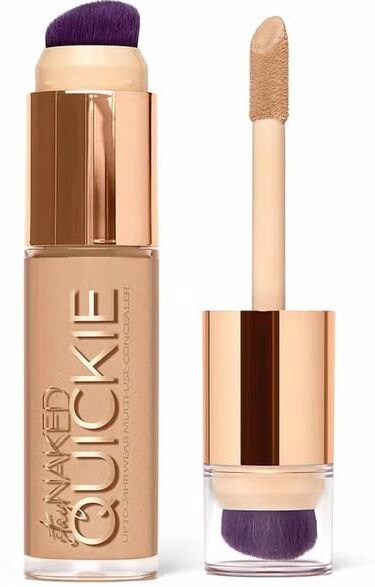
Urban Decay Stay Naked Quickie-10NnDiscover the Urban Decay Stay Naked Quickie Concealer, your new secret weapon for flawless, all-day coverage. This high-performance, full-coverage concealer is designed to deliver up to 24 hours of long-lasting wear with a natural, real-skin matte finish that won't fade or flake. Perfect for addressing common concerns like under eye dark circles, acne blemishes, hyperpigmentation, discoloration, and redness, its lightweight, waterproof formula offers one-swipe full coverage. The unique, dual-sided applicator features a precise doe foot wand for targeted spots and a built-in buffing brush, making on-the-go application incredibly convenient—simply "Tap it. Buff it. and be done." Infused with Vitamin E, this hydrating concealer ensures your skin stays moisturized all day long while minimizing imperfections and improving overall skin tone, making it the best choice for fast, reliable coverage. Ingredients: Water, Undecane, Glycerin, Dimethicone, Polyglyceryl-4 Isostearate, Synthetic Fluorphlogopite, Pentylene Glycol, Butylene Glycol, Tridecane, Cetyl Peg/Ppg-10/1 Dimethicone, Hexyl Laurate, Magnesium Sulfate, Polyhydroxystearic Acid, Octyldodecanol, Disteardimonium Hectorite, Disodium Stearoyl Glutamate, Cellulose Gum, Ethylhexylglycerin, Silica Silylate, Acrylonitrile/Methyl Methacrylate/Vinylidene Chloride Copolymer, Trihydroxystearin, Aluminum Hydroxide, Acetylated Glycol Stearate, Tocopherol, Isobutane, Glycine Soja Oil / Soybean Oil, Helianthus Annuus Seed Oil / Sunflower Seed Oil, Pentaerythrityl Tetra-Di-T-Butyl Hydroxyhydrocinnamate, [+/- May Contain Ci 77891 / Titanium Dioxide, Ci 77491, Ci 77492, Ci 77499 / Iron Oxides.32,00 £*Shipping: 0,00 £Secure redirect to the provider
-
Urban Decay Stay Naked Quickie-20NnDiscover the ultimate secret to flawless skin with the Urban Decay Stay Naked Quickie Concealer, a revolutionary 24-hour longwear, full-coverage formula designed for quick and convenient application. This best-selling waterproof and lightweight concealer minimizes the look of dark circles, acne blemishes, hyperpigmentation, discoloration, and redness, delivering a real-skin matte finish that won't fade or flake from day to night. Infused with hydrating vitamin E, this unique formula provides long-lasting moisture, ensuring comfortable all-day wear. The innovative dual-sided applicator features a precise doe foot wand for targeted spots and a built-in buffing brush, allowing you to Tap it, Buff it, and be done for perfect, on-the-go coverage. Go faster and stay longer with the Quickie Concealer and experience one-swipe full coverage that enhances your natural skin tone. Ingredients: Water, Undecane, Glycerin, Dimethicone, Polyglyceryl-4 Isostearate, Synthetic Fluorphlogopite, Pentylene Glycol, Butylene Glycol, Tridecane, Cetyl Peg/Ppg-10/1 Dimethicone, Hexyl Laurate, Magnesium Sulfate, Polyhydroxystearic Acid, Octyldodecanol, Disteardimonium Hectorite, Disodium Stearoyl Glutamate, Cellulose Gum, Ethylhexylglycerin, Silica Silylate, Acrylonitrile/Methyl Methacrylate/Vinylidene Chloride Copolymer, Trihydroxystearin, Aluminum Hydroxide, Acetylated Glycol Stearate, Tocopherol, Isobutane, Glycine Soja Oil / Soybean Oil, Helianthus Annuus Seed Oil / Sunflower Seed Oil, Pentaerythrityl Tetra-Di-T-Butyl Hydroxyhydrocinnamate, [+/- May Contain Ci 77891 / Titanium Dioxide, Ci 77491, Ci 77492, Ci 77499 / Iron Oxides.32,00 £*Shipping: 0,00 £Secure redirect to the provider
-
Urban Decay Stay Naked Quickie-30NnDiscover the Urban Decay Stay Naked Quickie Concealer, your new essential for flawless skin, featuring a 24-hour longwear, full-coverage formula designed for a natural, skin-like matte finish. This innovative, lightweight, and waterproof concealer is infused with nourishing vitamin E, ensuring all-day hydration while expertly minimizing the appearance of dark circles, acne blemishes, hyperpigmentation, discoloration, and redness without fading or flaking. Experience ultimate convenience with the first-of-its-kind dual-ended applicator, boasting a targeted doe foot wand on one side and a built-in buffing brush on the other, making on-the-go application effortless—just tap it, buff it, and you're done for up to 24 hours of reliable coverage. Upgrade your makeup routine with this high-performance color corrector and concealer that delivers one-swipe full coverage and stays put from day to night. Ingredients: Water, Undecane, Glycerin, Dimethicone, Polyglyceryl-4 Isostearate, Synthetic Fluorphlogopite, Pentylene Glycol, Butylene Glycol, Tridecane, Cetyl Peg/Ppg-10/1 Dimethicone, Hexyl Laurate, Magnesium Sulfate, Polyhydroxystearic Acid, Octyldodecanol, Disteardimonium Hectorite, Disodium Stearoyl Glutamate, Cellulose Gum, Ethylhexylglycerin, Silica Silylate, Acrylonitrile/Methyl Methacrylate/Vinylidene Chloride Copolymer, Trihydroxystearin, Aluminum Hydroxide, Acetylated Glycol Stearate, Tocopherol, Isobutane, Glycine Soja Oil / Soybean Oil, Helianthus Annuus Seed Oil / Sunflower Seed Oil, Pentaerythrityl Tetra-Di-T-Butyl Hydroxyhydrocinnamate, [+/- May Contain Ci 77891 / Titanium Dioxide, Ci 77491, Ci 77492, Ci 77499 / Iron Oxides.32,00 £*Shipping: 0,00 £Secure redirect to the provider
-
What is the difference between deontological ethics and utilitarianism?
Deontological ethics is an ethical theory that focuses on the inherent rightness or wrongness of actions themselves, regardless of their consequences. It emphasizes the importance of following moral rules and duties, such as telling the truth or keeping promises, regardless of the outcomes. On the other hand, utilitarianism is a consequentialist ethical theory that evaluates the morality of actions based on their outcomes. It prioritizes maximizing overall happiness or well-being for the greatest number of people, often through the calculation of benefits and harms. In summary, deontological ethics emphasizes the inherent morality of actions, while utilitarianism focuses on the consequences of actions. **
-
Is deontological ethics exactly the same as the categorical imperative?
Deontological ethics is a broader ethical theory that states that actions are inherently right or wrong, regardless of their consequences. The categorical imperative, on the other hand, is a specific formulation within deontological ethics proposed by Immanuel Kant. While the categorical imperative is a key component of deontological ethics, deontological ethics encompasses a wider range of principles and theories beyond just the categorical imperative. **
-
What are the differences between deontological ethics and utilitarian ethics?
Deontological ethics, also known as duty-based ethics, focuses on the inherent rightness or wrongness of actions themselves, regardless of their consequences. It emphasizes following moral rules and duties, such as telling the truth or keeping promises, based on principles like the categorical imperative. On the other hand, utilitarian ethics, also known as consequentialist ethics, prioritizes the outcomes or consequences of actions. It aims to maximize overall happiness or well-being for the greatest number of people, often through the calculation of benefits and harms. While deontological ethics emphasizes duty and rules, utilitarian ethics prioritizes the greatest good for the greatest number. **
-
What is the difference between deontological ethics and utilitarian ethics?
Deontological ethics, also known as duty-based ethics, focuses on the inherent rightness or wrongness of actions themselves, regardless of their consequences. This means that certain actions are considered morally right or wrong based on whether they adhere to a set of rules or principles. On the other hand, utilitarian ethics, also known as consequentialist ethics, evaluates the morality of actions based on their outcomes or consequences. In utilitarianism, the rightness or wrongness of an action is determined by its ability to produce the greatest overall happiness or pleasure for the greatest number of people. **
* All prices are inclusive of VAT and, if applicable, plus shipping costs. The offer information is based on the details provided by the respective shop and is updated through automated processes. Real-time updates do not occur, so deviations can occur in individual cases. ** Note: Parts of this content were created by AI.